Writing Great Villains - A Lesson Plan Featuring "The Beast and the Bethany" by Jack Meggitt-Phillips
Halloween is coming up, so let's talk about villains!

Who doesn't love (to hate) a good villain? It's important for a story to have a strong, well-developed villain. The villain must be a worthy adversary for your hero, pushing your hero to grow and change.
In The Beast and the Bethany by Jack Meggitt-Phillips, the Beast is an all-powerful villain who doesn't pull punches. We know from chapter one that he will be a difficult force to overcome. How? The author doesn't tell us how terrible the beast is; he shows us, by having him manipulate and devour an innocent bird on page 10. From that moment on, we are nervous for our girl Bethany. How will she defeat such a powerful being?
If you're reading The Beast and the Bethany, or if you want to explore villains in your writing class, check out this lesson plan on writing great villains.

ENGAGE
-Start with a question: Who is the most famous villain of all time?
-Have them defend their choices. What makes that character a memorable villain?
-More tricky questions: How does the villain challenge the hero? How does the villain create conflict?
-Optional but fun: dress up like your favourite villain and sing "If You're Happy and you Know It" but change the words to "if you're sneaky and you know it, tap your claws." I'd be tempted to let the students dress up like villains, but then again, I don't think I'd be prepared for the ensuing chaos.
EXPLORE
-Read the first two chapters of The Beast and the Bethany by Jack Meggitt-Phillips.
-Brainstorm a list of what makes the Beast a powerful villain.
-Give them some time to invent their own villain. You can help them by providing a prompt sheet that includes:
-Villain name
-Appearance
-The way it smells
-The way it moves
-Where does it live?
-How do people react when they see it?
-What does it do every day?
-What are its goals in life?
-Let the students share their villains with the class (if they want).
EXPLAIN
A powerful villain often has a thematic connection with the hero. One way to do this is to have the villain mirror an aspect of your hero, but take it to the extreme. We find this in The Beast and the Bethany. Bethany and Ebenezer are both rather selfish people, but the Beast is severely egocentric. He's so selfish, he wants to eat little children for fun! He holds up a mirror to Bethany and Ebenezer, and that pushes them to change. To defeat the beast, they must work together and make sacrifices.
-Give your students some heroes and have them invent a villain character that takes an aspect of the hero's personality to the extreme. It might be fun to do this as a group. Here are some possible heroes:
A hero who loves puppies but spends too much time on the internet.
A hero who is good at cooking, but they are angry at their mother.
A hero who is unpopular and shy, but they are really good at drawing.
A hero is very strong, but they cry easily (and that embarrasses them).
A hero who wants to be good at the piano but hates practicing.
A hero who is kind, but they want to make lots of money.
For example, for the hero who is good at cooking but angry at their mother, a possible villain could be someone, maybe a chef, who hates all women. They are so enraged by women, they've invented a potion that turns women into hats. I mean, from there, the story basically writes itself.
EXTEND
-Students choose one of the villains they invented in the explore or the explain section. Ask them to write a scene where their hero sees the villain for the first time. Their goal is to establish the villain as being more powerful than the hero.
-How to do that? Here are some ideas:
-Is your hero good at something? Make your villain even better.
-Your hero arrives to see the terrible aftermath of the villain's actions
-Your villain does something awful (like the beast eating the poor bird)
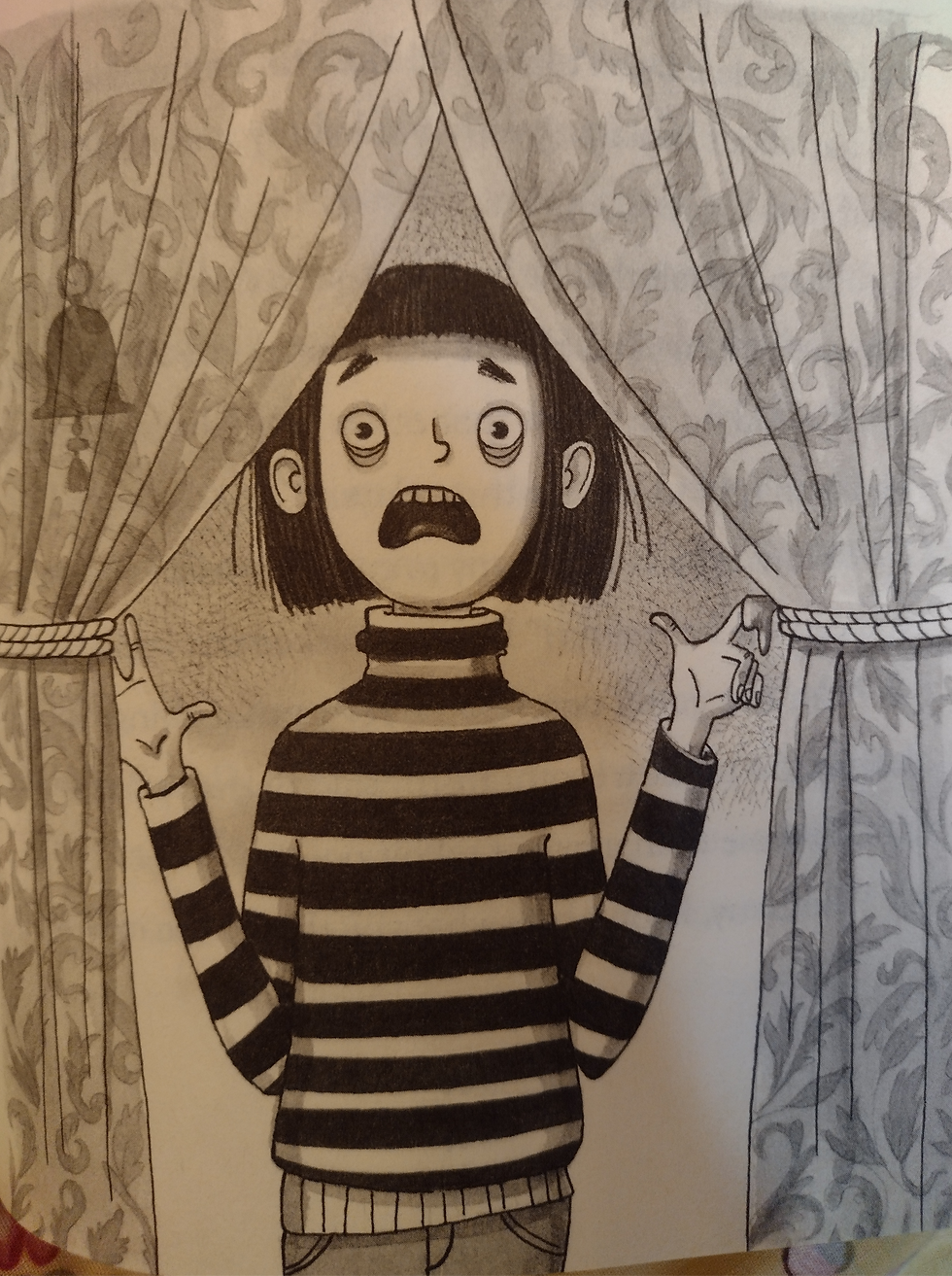
I must admit, I enjoy writing scenes with bad guys. They can be so (terribly) fun. If you try this lesson plan, please leave a comment and let me know how it goes! Hopefully, your group will enjoy exploring villainous behaviour! And definitely check out The Beast and the Bethany by Jack Meggitt-Phillips. It has a lot of great illustrations by Isabelle Follath, and it's the kind of dark, unpredictable story that I love!


Comments